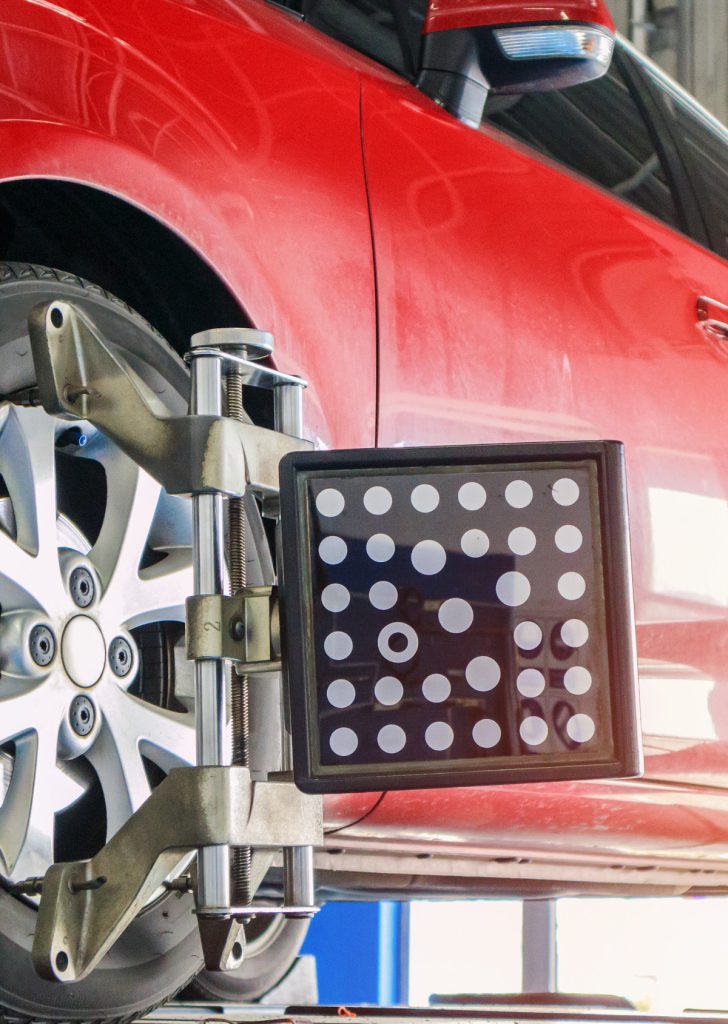
Correct wheel alignment is crucial to keeping your vehicle safe and car parts free from damage and wear. If your wheel tracking is incorrect, then your vehicle will manoeuvre to one side while you drive or turn, and the steering will not be as responsive. These issues with your vehicle will impede the handling and could cause incidents. If your vehicle’s wheels are misaligned it will also increase your vehicles fuel consumption which will raise your day to day running costs.
How can I tell if my vehicle's wheels need aligning?
If you are experiencing any of the following issues, you can contact our experienced SMTA qualified technicians to get you booked in for a check.
Vibration through the steering wheel
Screeching or rubbing noises when you turn
Uneven tyre wear, such as feathering, when one side of the tyre is much more worn than the opposite side
Caster, Camber and Toe - What does it mean?
Caster
Caster is the measurement beginning at the steering axis and ending at the opposite axis when viewed from the side of the car. In other words, it is whether the vehicle is at its proper height at both the front and rear of the vehicle. Because the vehicle’s height is ultimate what impacts caster, worn springs can lead to caster problems, as can modifying a vehicle with a lift kit. When the caster is out, the vehicle can pull to the right or left.
Camber
Camber is the degree to which the vehicle’s wheels are angled when viewed from the front end of the car. While there is always a certain degree of camber, there mustn’t be an unequal camber between tires. When the camber is unequal, the vehicle will pull to the side with the most camber. Camber issues can lead to uneven or premature tyre wear.
Toe
Toe measures the degree to which the vehicle’s wheels are pointed in or out. When the toe is off even slightly, drivers will experience vibrations while driving. Toe problems will also lead to issues such as premature or uneven tyre wear.